
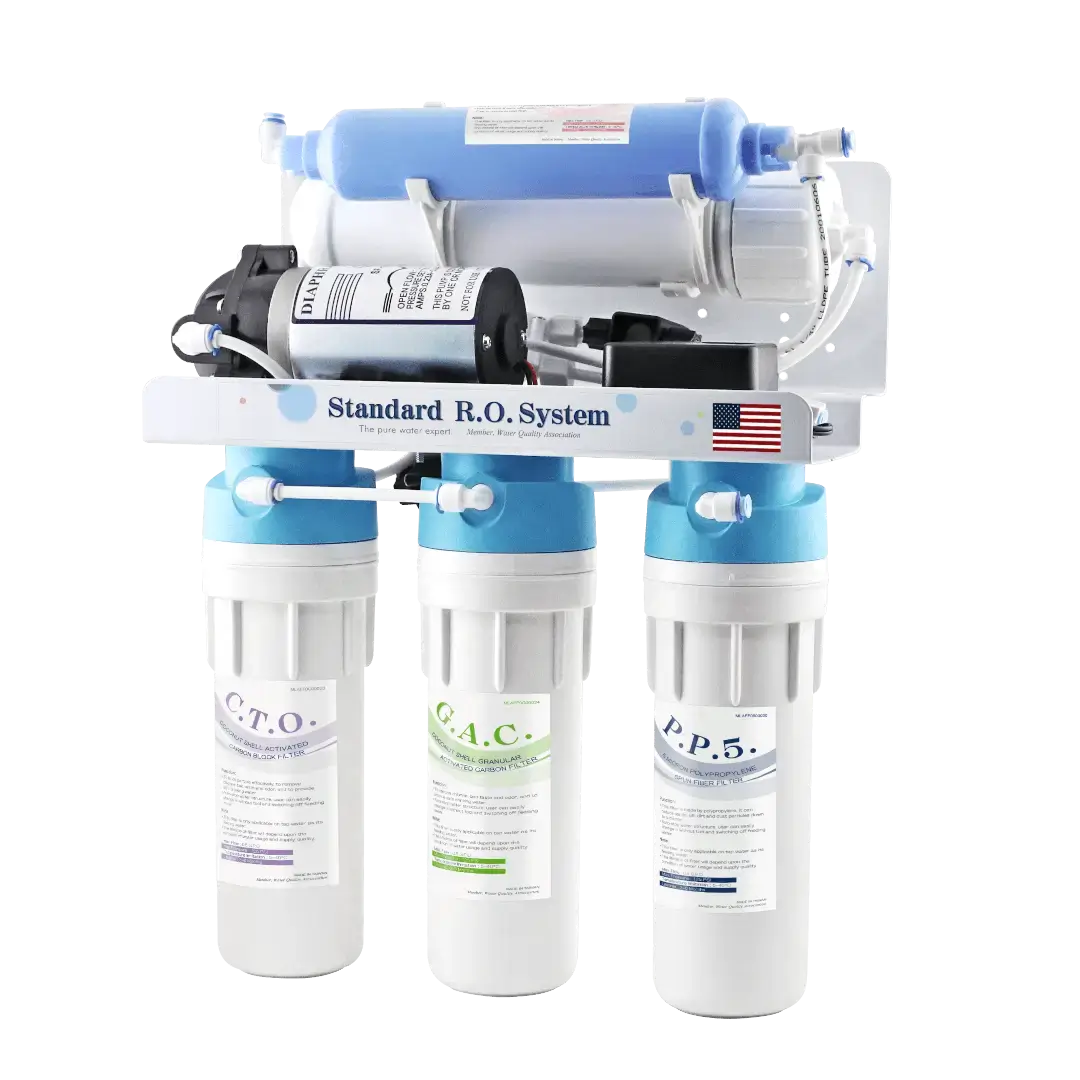
RO System vs Standard Filters: Which is Better?
When it comes to water filtration, the two most popular options are standard filters and reverse osmosis (RO) systems. But which is better for you? Let's examine the key differences.
Standard filters include sediment filters, activated carbon filters and mechanical filters. They work by blocking physical particles and absorbing some chemicals. They are simple to install, have lower initial costs and require minimal maintenance.
Standard filters are ideal for: removing chlorine and improving taste; removing sediments and sand; basic appliance protection; and limited budgets.
RO systems use a semi-permeable membrane that allows only water molecules to pass through, blocking almost all impurities. This technology removes up to 99% of contaminants, including: dissolved salts; heavy metals like lead and arsenic; bacteria and viruses; nitrates and fluorides.
RO systems are recommended for: families who want the purest water possible; areas with poor water quality; preparing food for young children; and people with compromised immune systems.
Cost is an important factor. Standard filters cost 50-200€ for installation, while RO systems range from 300-800€. However, long-term maintenance costs are similar, and RO systems offer much more complete protection.
The final decision depends on the water quality in your area and your specific needs. Contact us for a free consultation and we will help you choose the right system.